🧠 Synapse
Ear training Our story For Organizations β†’

How can I get back a language I forgot?

The language is dormant, not gone; re-expose yourself to what you half remember and recall old words instead of rereading them.

You spent years on a language. Maybe you learned it in school, or grew up speaking it. Now you're sure it's gone. It isn't. That's the good news, and the way back is faster than you'd expect.

You didn't lose your language. It went dormant. Memory researchers separate storage from retrieval. Much of what you learned is still stored; you just can't reach it right now. The path is overgrown, not destroyed. That difference matters, because an overgrown path can be cleared again, and quickly.

That's why coming back is so fast. Ebbinghaus measured it first, and it's called the savings effect: relearning something takes far fewer repetitions than learning it new, and the effort you save shows the memory was still there. Your second pass through those old words climbs much faster than your first ever did. You're not starting over. You're getting a running start.

And some of your language never faded at all. Psychologist Harry Bahrick tested people decades after they had studied a language. Words practiced enough had settled into what he called a permastore, where they barely erode. Counting, greetings, the words you used most: they're probably still intact, waiting for a trigger.

You don't need to relearn from scratch. You need to reactivate. Start by re-exposing yourself to material you can still half-follow. Don't just re-read it. Pull the old words back with quick recall, and let each memory drag the next one up with it. A few focused sessions will wake up far more than they teach.

In Synapse, you add the words you used to know, recall each one, and rate how it went. The schedule leans on the savings effect: words that come back easily get spaced out, and the ones that don't return sooner. Reactivation stays quick, and it sticks.

So don't write it off. That language is dormant, not gone, and thanks to the savings effect, getting it back is faster than you'd guess. Switch the light back on. Start with Synapse.

Practice this with real words

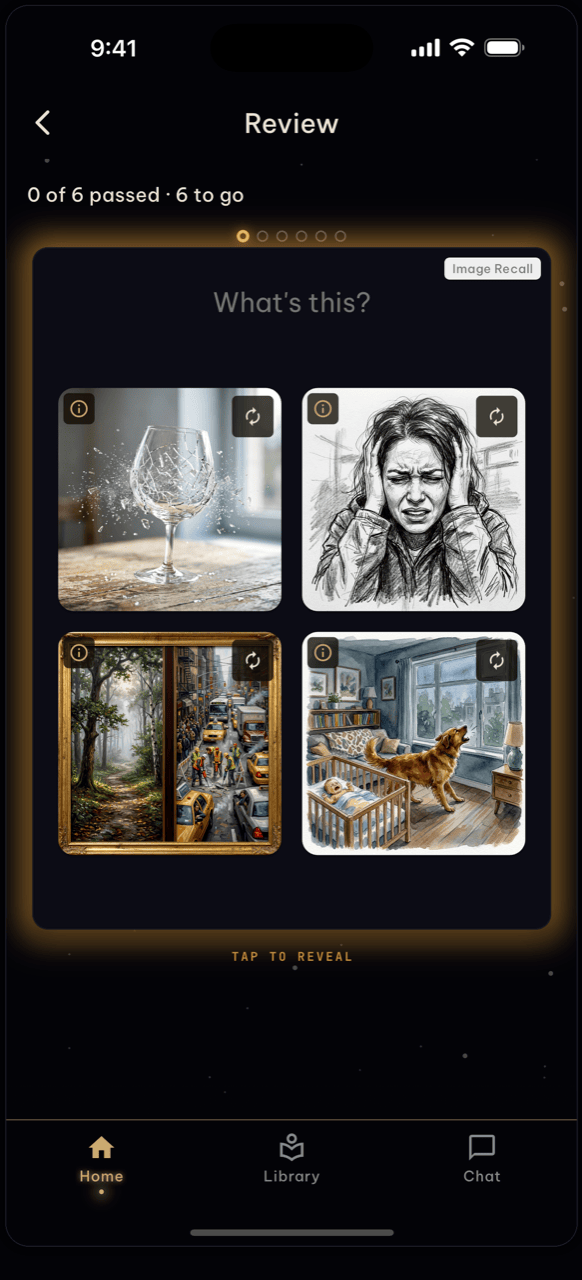
In the app you recall words before checking them, listen to word pairs that differ by one sound, and follow short stories without translation.

The vocabulary review screen, showing a word before its meaning is revealed.

The app is free to download with a free tier. A subscription is optional and starts with a free one-week trial.

Learn a few words in the app, then come back and review them.

Anyone can learn a language. At any age.

Ear first. Mouth next. Play always.

Stories that teach you to speak

Illustrated story podcasts feed you the language the way your brain wants it β€” scene by scene, episode by episode. No vocabulary lists.

Why stories work β†’

Stop translating. Start speaking.

Words stick when they connect straight to images and moments β€” not to your native language. Synapse never asks you to translate.

Why translation holds you back β†’

Fluency forever, not streaks forever.

True spaced repetition (FSRS) schedules each word right before you'd forget it. Miss three nights? Nothing breaks β€” the schedule bends to you.

Reviews land exactly when your memory needs them β€” the gold line is you with Synapse.

No such thing as too old

The β€œcritical period” is a myth, and it survives because it is convenient: it lets you stop. The science says adults who stay focused, learn in small bits, and sleep on it rewire just as well. We wrote down what we believe, with the research linked.

Read our story β†’

One home screen. Every skill a star.

This is the app's real home β€” a night sky where every feature is a star. Tap one to preview it.

Point your camera. Learn the world.

Language Lens names what your camera sees β€” in the language you're learning, right where you live.

A morning table β€” coffee, a plant, a book and a dog β€” with Synapse labeling each object in the language being learned la taza97% la planta98% el libro94% el perro99%

How to Learn

Methodology lessons β€” watch in any order, but this sequence is optimal

One day, someone speaks β€” and you just answer.

Most apps count your streak. Synapse builds that day β€” a few minutes at a time.

Not sure which language? Take the two-minute quiz β†’