Which words should I learn first in a new language?
Start with everyday words learned in vivid scenes, each with its own image, not in lists of look-alike words that blur together.
Yesterday you learned ten new words for fruit: apple, pear, peach. It felt productive. Today they've blurred together, and you can't recall which word is which. That isn't your memory failing. It's how those words were grouped, and there's a simple, research-backed fix.
Sorting new words by category seems smart. Learn 'apple', 'pear', and 'peach' all as fruit, and they hang on the same mental hook. Reach for 'apple', and 'pear' and 'peach' come up with it, blurring each other. Similar words compete and overwrite one another. Erten and Tekin found that children recalled words taught in same-category sets worse than the same words taught in mixed sets, and the gap grew a week later.
You probably group new words by category, all the fruit together. It feels organized. But the tidier your categories, the worse your recall. Your brain tangles similar words. What looks like smart organization is quietly working against your memory.
So instead of 'apple, pear, peach', picture one scene: a green, slimy frog, mid-hop, in a pond. Each word plays a different role in the same moment. Nothing competes. The words support each other, and each one gets its own hook. Tinkham found that words grouped this way needed about half the repetitions to stick: roughly six per word instead of eleven.
Take that frog. It lives in a pond. It's green and slimy. It hops and croaks. Each word has one role. Recall 'pond', and 'frog' comes with it. 'Green' brings 'slimy'. They support each other. Now put 'frog' in a list with 'cat', 'dog', and 'bird'. Every cue points to every animal at once. In a scene, 'frog' owns its context. No competition.
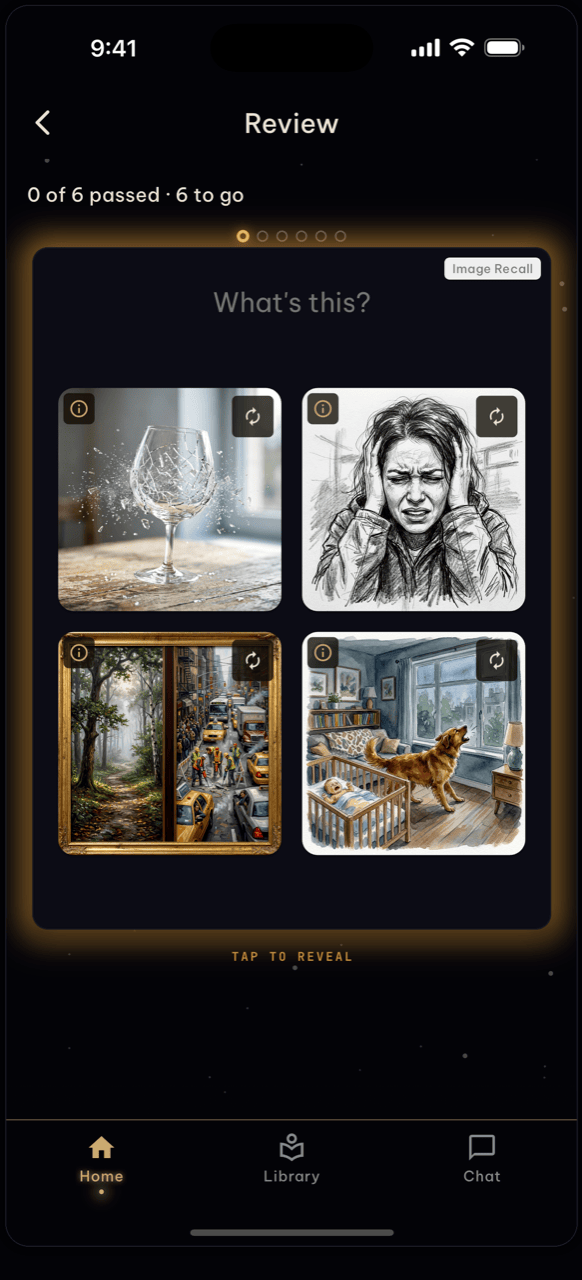
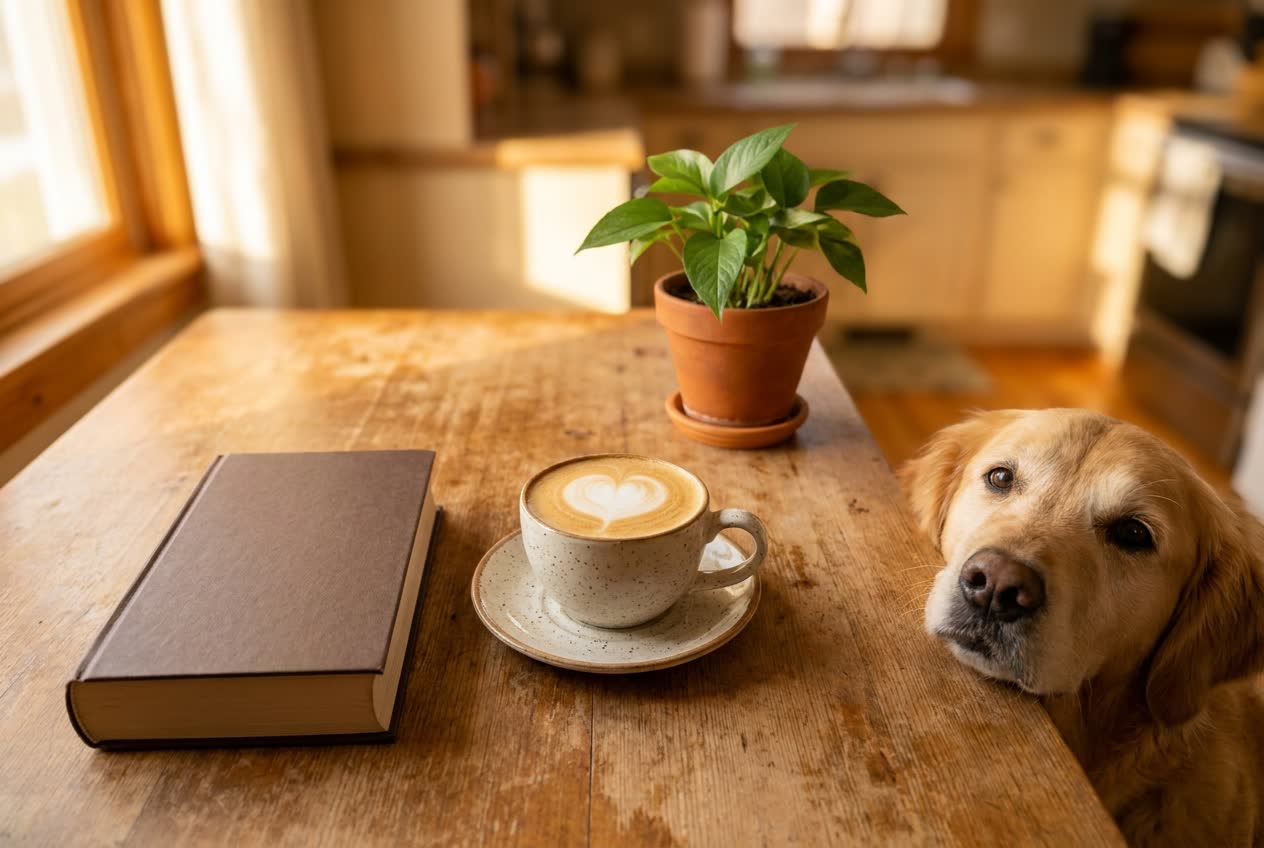
This is what Synapse is built on. Your base vocabulary comes in image-based story scenes, not category lists, so each word stays separate and nothing interferes. Every word gets its own image. Snap your own photo, say of your own dog, or generate one. A personal image creates a powerful memory. And because every scene is different, your words come interleaved, and spaced repetition brings each one back at the right moment.
So don't learn words in lists. Learn them in vivid scenes, each with its own image. These first words carry more weight than almost any you'll learn later. Try Synapse's Base Vocabulary course, and feel the difference.