🧠 Synapse
Ear training Our story For Organizations β†’

What beliefs stop adults from learning a language?

Four false ones: needing a gift, needing to move abroad, mastering grammar first, and sounding native; you need none of them to start.

The real barrier to a new language usually isn't the language. It's a handful of false beliefs about who can learn it, and how. Let's clear four of them out of your way.

You've heard it: some people just have a gift for languages, and the rest of us don't. It's not true. Study after study finds that aptitude is a small factor next to consistent, well-timed practice. The people who succeed aren't gifted. They showed up regularly with a good method. And you already learned one language, start to finish. You've done this before.

Then there's the big one: move abroad, or leave the TV on, and you'll just soak it up. But exposure only counts when you understand it. Stephen Krashen put a name on this: comprehensible input. Sound you can't follow is only noise. That's why people can live somewhere for years and never learn. Immersion works when it's active and understandable, and you can find content you understand right where you are.

Next: the belief that you must master every grammar rule before you dare to speak. In reality, grammar grows from understanding and using the language. You feel what's right long before you can name the rule, exactly the way you did with your first language. Drilling rules alone builds people who ace the test and freeze in conversation. Learn a little, use it early, and let the rules click into place.

And the one that keeps mouths shut: the fear that if you don't sound exactly like a native, you've failed. You haven't. The goal is to be understood, and millions of people speak a second language with an accent every day and communicate just fine. You're understood long before your accent is flawless. Aim for clear, not perfect. Chasing a perfect accent is the surest way to never open your mouth.

None of these four myths is about the language. They're about you, and they're all false. You don't need a gift, a plane ticket, a grammar book, or a perfect accent. You need to start, understand a little, and use it. Let's do exactly that with Synapse.

Practice this with real words

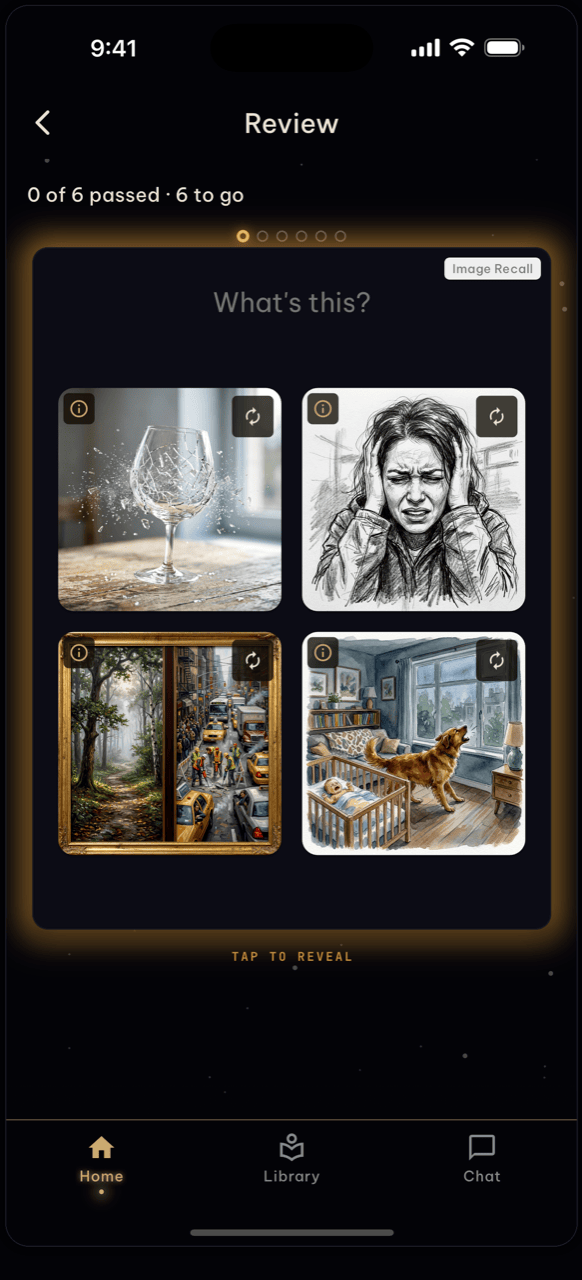
In the app you recall words before checking them, listen to word pairs that differ by one sound, and follow short stories without translation.

The vocabulary review screen, showing a word before its meaning is revealed.

The app is free to download with a free tier. A subscription is optional and starts with a free one-week trial.

Learn a few words in the app, then come back and review them.

Anyone can learn a language. At any age.

Ear first. Mouth next. Play always.

Stories that teach you to speak

Illustrated story podcasts feed you the language the way your brain wants it β€” scene by scene, episode by episode. No vocabulary lists.

Why stories work β†’

Stop translating. Start speaking.

Words stick when they connect straight to images and moments β€” not to your native language. Synapse never asks you to translate.

Why translation holds you back β†’

Fluency forever, not streaks forever.

True spaced repetition (FSRS) schedules each word right before you'd forget it. Miss three nights? Nothing breaks β€” the schedule bends to you.

Reviews land exactly when your memory needs them β€” the gold line is you with Synapse.

No such thing as too old

The β€œcritical period” is a myth, and it survives because it is convenient: it lets you stop. The science says adults who stay focused, learn in small bits, and sleep on it rewire just as well. We wrote down what we believe, with the research linked.

Read our story β†’

One home screen. Every skill a star.

This is the app's real home β€” a night sky where every feature is a star. Tap one to preview it.

Point your camera. Learn the world.

Language Lens names what your camera sees β€” in the language you're learning, right where you live.

A morning table β€” coffee, a plant, a book and a dog β€” with Synapse labeling each object in the language being learned la taza97% la planta98% el libro94% el perro99%

How to Learn

Methodology lessons β€” watch in any order, but this sequence is optimal

One day, someone speaks β€” and you just answer.

Most apps count your streak. Synapse builds that day β€” a few minutes at a time.

Not sure which language? Take the two-minute quiz β†’