Can adults really learn a language as well as children?
Yes; children only have more hours, and as an adult you learn on purpose, so build each word with sounds, images, and context.
You've studied a language for years. A child who can barely tie their shoes speaks it better than you. How is that possible? Everyone says children are just better at this, and that you missed your window. Which leaves one question: can you? And what if the comparison between you and that child was rigged from the start?
Children do have one real advantage. In their first months of life, babies hear sound differences that adults miss. By their first birthday, they've lost most of that for sounds their language doesn't use. It's a real window, but a narrow one, not a lifelong superpower. And you can do something a baby can't: train your ear on purpose.
Children's biggest advantage is time: over 15,000 hours of passive immersion. You don't have that time. You have a job and responsibilities. So you need methods that work better per hour.
Children get a brief sound window and a lot of time. But none of that outweighs your ability to learn strategically. You learn grammar faster. You study with purpose. You build systems that work. So stop asking "Can I learn a language?" Ask how.
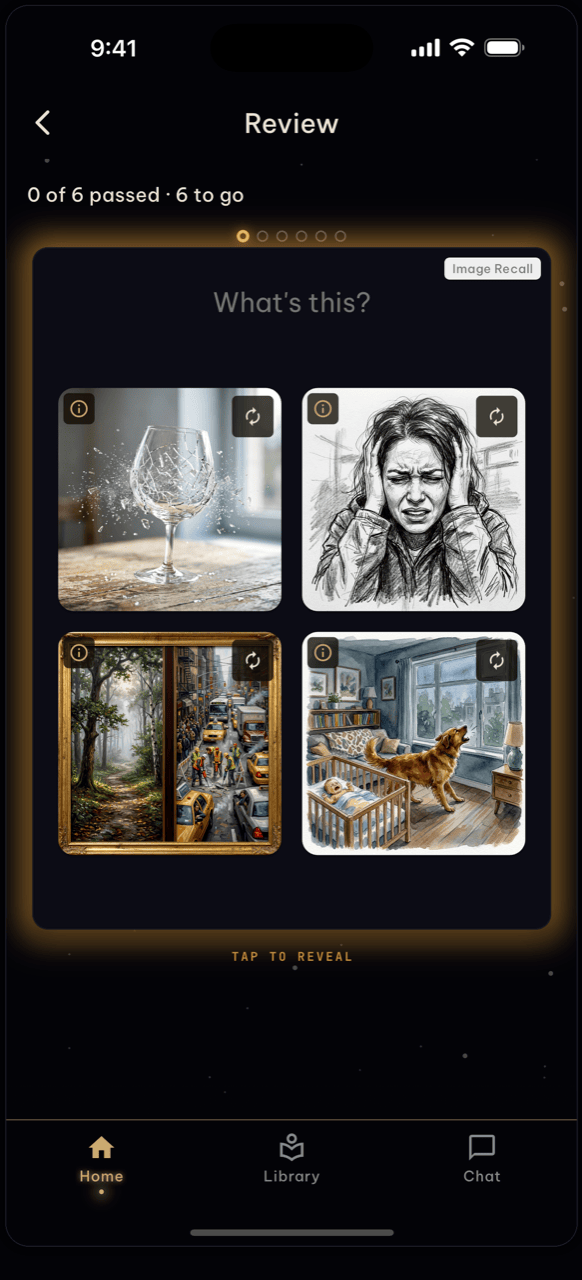
Your brain doesn't keep a word in one place. It stores it as a network, linked across many regions. A translation flashcard builds a single thin connection: a foreign sound tied to a native word. But your native words? Those have dozens of connections, to sounds, images, feelings, and moments you've lived. That web is what keeps them, year after year. A single thin link breaks fast.
Fragile memories come from single connections. Strong ones come from many. Your brain takes in words through two channels, verbal and visual, and a memory stored in both lasts longer. Paivio showed this with a simple test. People memorized lists of words, and they recalled concrete words like 'dog' about twice as often as abstract words like 'justice'. Concrete words engage both channels. Abstract ones mostly use one. Add sound, feeling, and your own experience, and a word can have dozens of connections, each one a path back to it. That's multisensory encoding, and it's how you know the words of your first language. You don't translate 'dog'. You see one, hear one, feel its fur. Give every new word that many paths. That's what Synapse is built for: you pick your own images, hear each word from a native speaker, and add your own context. Every sense engaged is another path back.
You don't need a language gene. You don't need special talent. You don't need to move abroad, or to start as a child. Being an adult is an advantage. What you need is the right method and steady practice. If you learned a first language, you can learn another.
You're an adult, and that's your advantage. This method works because it builds strong, lasting memories. You can learn a language. Find out what learning one the right way feels like. Try Synapse today. Let's get started.